The Requirement
One of our Higher Education clients wanted to ensure its building plant systems met modern standards. Their objective was to integrate modern practices and technologies, while preserving the historical heritage of their structure. This strategy guarantees that the building operates efficiently and remains sustainable in the current climate. Consequently, meticulous attention was necessary to determine the appropriate HVAC specifications tailored to the building’s unique requirements.
This AHU Replacement project involved the review, specification and installation of two replacement Air Handling Units (AHUs) for a higher education client. RCRProjects identified that the existing units were operating inefficiently and had exceeded their expected lifespan, creating both operational and energy performance concerns.
Review
RCRProjects began by undertaking a comprehensive review of the existing AHUs and their operating environment. We assessed the condition of the equipment. In addition, we compared its performance against modern efficiency and compliance standards.
The review revealed that the AHUs were struggling to deliver reliable air quality to the building and were consuming far more energy than comparable modern units. A detailed energy model was carried out, forecasting costs and efficiencies over a five-year period. The analysis showed that remedial works could only provide a short-term solution. As a result, full replacement offered better long-term value, lower carbon emissions and improved reliability
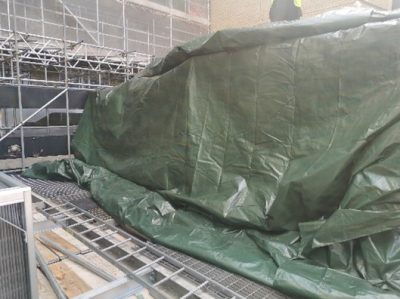
The location of the units also presented a unique challenge, as they were situated on the second-floor roof of a six-storey structure. RCRProjects conducted a logistics assessment to determine how the replacement could be safely undertaken without disrupting building operations or compromising the historical fabric of the property. This early stage of work was critical in giving the client a clear understanding of both the risks and opportunities of the project, enabling them to make informed decisions about the best way forward.
Advise
We provided the client with practical recommendations and a clear programme of works. This involved:
-
Designing new AHUs compliant with UK 2024 standards.
-
Incorporating DX heating and cooling coils to remove reliance on gas-fired heating, instead switching to electricity-driven solutions.
-
Developing a methodology for safe dismantling and installation within the constraints of a historic building.
-
Preparing and reviewing detailed Risk Assessments and Method Statements (RAMS) to ensure safety of both operatives and occupants.
Support
RCRProjects then moved from advisory into delivery, providing hands-on project management throughout the installation. We coordinated trusted subcontractors and oversaw every stage of the works to ensure the project remained on track in terms of quality, safety, and programme.
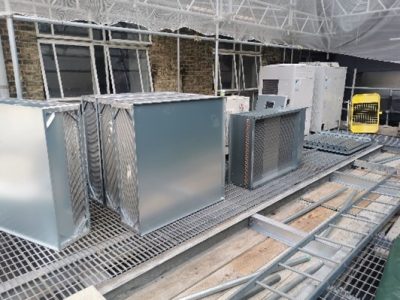
A new steel base structure was fabricated and installed, specifically designed to support the weight and dimensions of the replacement AHUs. Given the building constraints, the units were mobilised into the property in flat-packed sections, carefully transported through internal spaces and assembled on-site with precision. This approach minimised disruption to building operations and safeguarded the heritage fabric of the property.
Throughout the works, RCRProjects team maintained a constant presence on-site, ensuring that each phase from dismantling the existing units through to commissioning the new installations was carried out in accordance with both the agreed design and safety standards. This comprehensive support meant the client had a single, accountable point of contact throughout the project, providing confidence and assurance at every stage.
The Solution
Following our Review > Advise > Support approach, the project resulted in:
-
A sustainable ventilation system with reduced energy use and lower running costs.
-
Elimination of fossil fuel dependency, supporting the client’s Net Zero strategy.
-
Increased reliability and lifecycle performance of the AHUs, reducing future capital spend.
Over the past five years, RCRProjects has continued to support this client, delivering projects with a combined value of over £1.5 million. Our enduring partnership demonstrates the trust we have built and our ability to act as a strategic extension of the client’s estates team.